
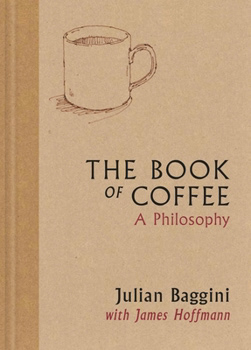
A Meditative Philosophy for the Modern Cup
Coffee books tend to fall into familiar categories: brewing manuals, origin stories, or glossy celebrations of café culture. The Book of Coffee: A Philosophy takes a different path. Written by philosopher Julian Baggini and coffee expert James Hoffmann, the book treats coffee not just as a beverage, but as a lens through which we can examine modern life, attention, ritual, and meaning.
Rather than asking how to make better coffee, Baggini and Hoffmann ask why coffee matters—and why it has become such a powerful symbol in our everyday routines.
Coffee as Ritual, Not Fuel
One of the book’s central ideas is that coffee has been reduced, too often, to pure utility: caffeine as productivity fuel, consumed hastily on the commute or between meetings. The Book of Coffee pushes back against this mindset, arguing that coffee has historically been—and can still be—a ritual of pause and presence.
The authors explore how attentive preparation and mindful drinking transform an ordinary act into something richer: a moment of connection with oneself or with others. In a culture obsessed with speed and efficiency, the book suggests that coffee can be an everyday practice of resistance—an invitation to slow down rather than speed up.
A Philosophical Lineage in a Coffee Cup
The book is explicitly inspired by The Book of Tea (1906) by Kakuzō Okakura, a work that used tea culture to illuminate aesthetics, impermanence, and harmony. Baggini and Hoffmann borrow this structure and spirit, tracing a philosophical lineage that spans Eastern and Western traditions while remaining firmly grounded in contemporary life.
Chapters move fluidly between reflections on cafés, taste, craftsmanship, imperfection, and impermanence—inviting readers to see coffee not as a luxury or indulgence, but as a shared human practice embedded in history, labor, and imagination.
Expertise Without Elitism
With James Hoffmann as co‑author—an internationally recognized coffee professional—the book carries deep technical understanding. But notably, that expertise is never wielded to gatekeep. The Book of Coffee resists the culture of coffee snobbery, emphasizing curiosity over connoisseurship and experience over rules.
Hoffmann’s background grounds the text in real-world coffee culture, while Baggini’s philosophical voice keeps the discussion expansive and humane. The result is a book that welcomes casual drinkers and seasoned enthusiasts alike, without demanding specialized knowledge from either.
Coffee and the Art of Living
Ultimately, this is a book about how we live. Coffee becomes a metaphor for attention, care, and the choices we make in everyday life. The authors suggest that meaning is not found only in grand gestures or life‑changing decisions, but in how we approach the small, repeated actions that shape our days.
By reframing coffee as an opportunity for reflection rather than acceleration, The Book of Coffee offers a subtle but persuasive critique of modern burnout culture—one grounded not in abstraction, but in the familiar warmth of a cup held in the hands.
Conclusion
This book is not a brewing guide, nor a manifesto. Instead, it is a quiet, thoughtful companion—best read slowly, perhaps with a cup of coffee cooling beside you.
It reminds us that even the most ordinary habits can become sources of insight. All it asks is that we pay attention.